
Best Sunglasses for Round Faces (2026)
4 real picks, tested against real specs and prices
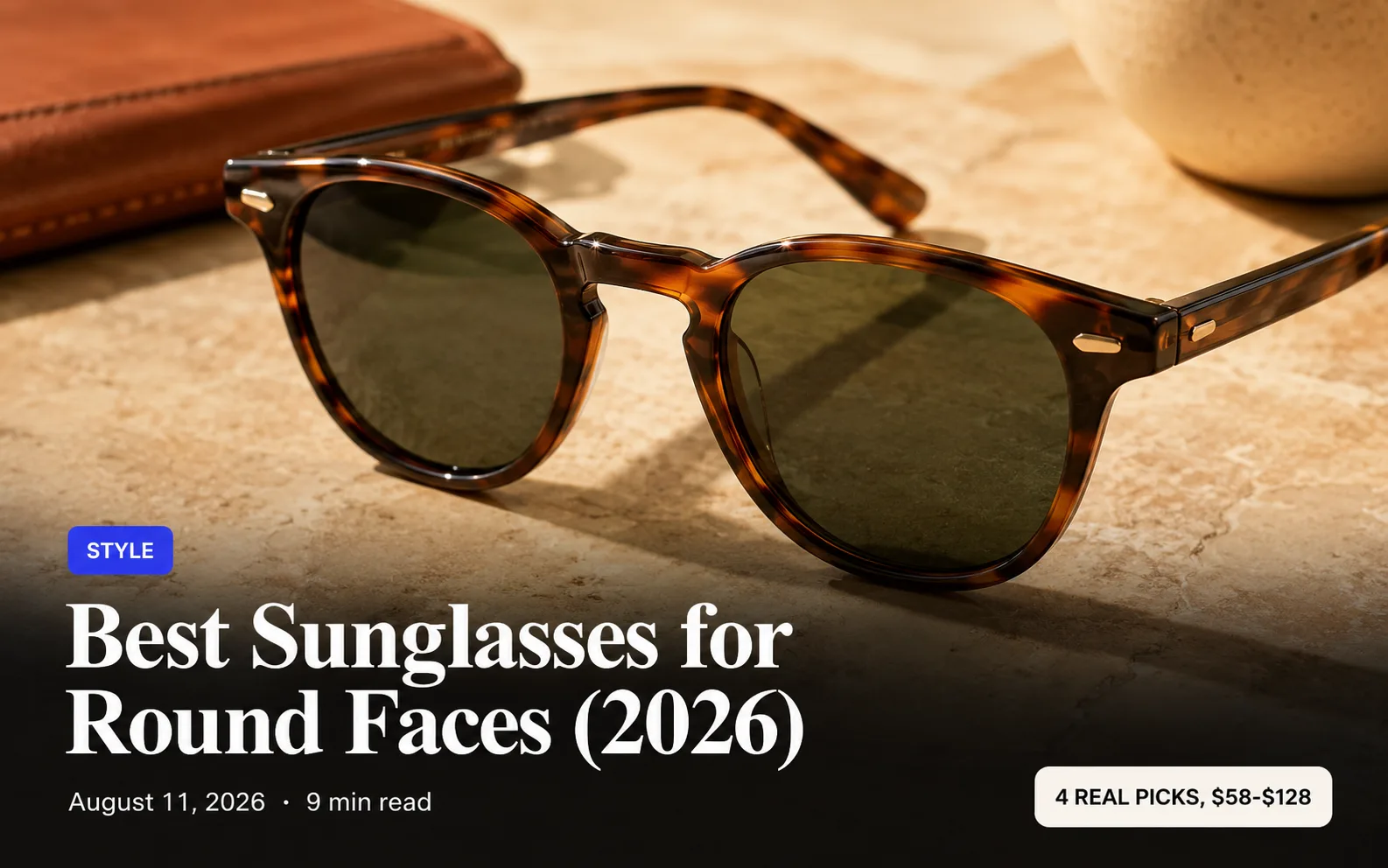
You've stood in front of a mirror wearing a pair of round or oval sunglasses and felt something was off, even if you couldn't name it. The lenses echoed the shape of your face instead of doing anything for it. That's the actual problem with most "best sunglasses" roundups: they sort by brand and trend, not by what a frame does once it's sitting on a face with soft curves and full cheeks.
Round faces have width and height in close to equal proportion, with a rounded jawline and no sharp angles to speak of. The fix isn't a bigger frame or a bolder color. It's a shape with real structure: straight top lines, defined corners, some kind of angle that a round face doesn't already have. We looked at four pairs that actually deliver that, from four brands with different price points and different design philosophies, and skipped the ones that just repeat the roundness back at you. If none of these four fit and you want to browse further, Naarayan's style category has a wider range of sunglasses and accessories to compare against these picks.
What actually adds structure to a round face
Frame shape does the heavy lifting here, not lens size or lens color. A straight or angular brow line breaks up the curve of the forehead and cheekbone. Corners, even soft ones, read as structure your face doesn't naturally have. Width matters too: a frame that sits noticeably wider than your face's widest point creates the illusion of length, which is the opposite of what a round face needs more of.
Skip anything genuinely round or oval. It sounds obvious once you say it out loud, but round lenses are still one of the best-selling shapes every summer, largely because they photograph well on faces that aren't round. On a round face, a round lens just doubles down on the exact proportion you're trying to balance out.
Size matters more than most buyers expect. A frame that's too small gets swallowed by a fuller face and reads as an afterthought. A frame that's oversized in the wrong way, without any real corner or angle, just becomes a bigger round shape. The sweet spot is a frame with real width and a defined edge, not just more surface area.
Bridge fit is the detail almost nobody checks before buying online, and it's the reason a frame that looked right in a photo can sit crooked or slide down once it's actually on your face. A round face usually has less bridge projection than an oval or oblong one, so a frame with a low, wide nose bridge tends to sit flatter and more evenly than one built for a higher, narrower bridge. None of that shows up in a listing photo, which is why checking a brand's own fit notes (Sunski, for one, prints this directly on every product page) matters more than trusting the thumbnail.
Price, materials, and lens details came directly from each brand's current product listing, pulled the same week this guide was researched. No sponsored placement, and no single frame crowned best for everyone, because a $58 pick and a $128 pick are answering different questions about fit and finish.
1. Warby Parker Carson ($95)
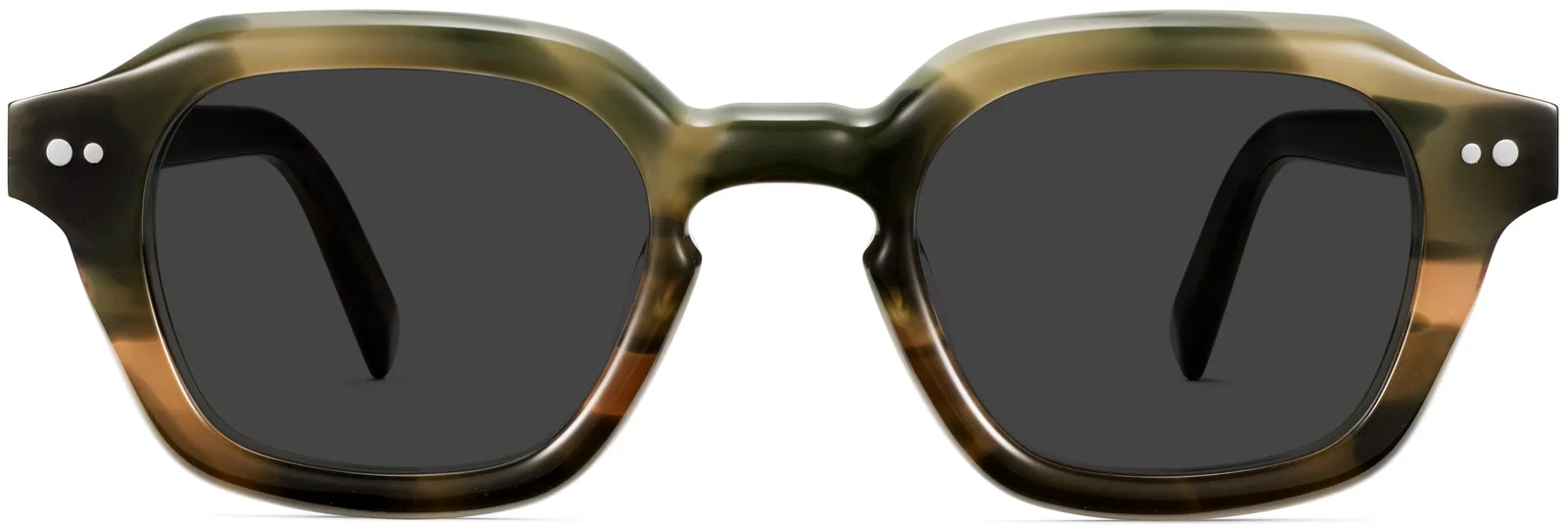
This is the one to buy if you want a safe, everyday square frame without spending three figures or guessing on shape. The Striped Eucalyptus colorway is a mottled brown-green acetate that reads more neutral in person than the name suggests, and the sharp top corners with a straight brow line give exactly the kind of contrast a round face benefits from.
Key specs:
- Price: $95, includes lenses (no separate lens upcharge)
- Frame material: acetate, square shape
- Lenses: polycarbonate, scratch-resistant coating, 100% UV protection
- Width: listed as "Wide" fit by default
- Extras: free shipping, free 30-day returns
Best for: buyers who want a safe, everyday square frame without spending three figures.
Skip if: you want something with more personality than a clean acetate square delivers.
Honest caveat: it comes in one width by default (this listing is "Wide"), so if your face runs on the narrower side within round, check Warby Parker's width guide before you order, since a too-wide frame can look like it's wearing you instead of the other way around.
2. Quay 5th Ave ($105)
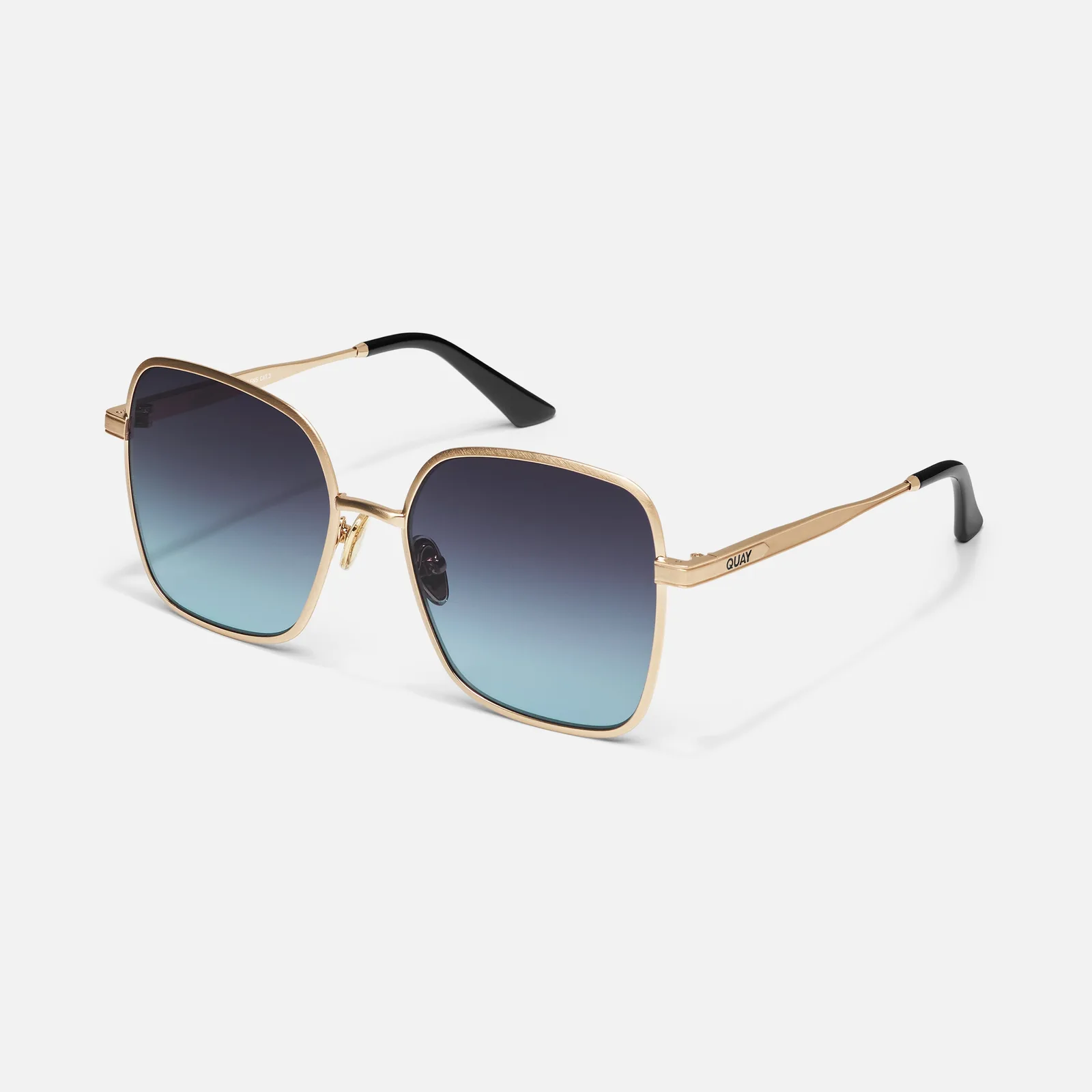
The scale is the point here: this oversized square frame sits well past the width of most faces, which is exactly the kind of proportion contrast that works against roundness. The brushed gold metal finish keeps it lighter than an acetate frame of the same size would feel, and beveled edges on the lenses catch light differently than a flat acetate frame would.
Key specs:
- Price: $105
- Frame material: brushed gold metal, oversized square shape
- Lens detail: beveled edges, gradient brown lenses
- No hard case included at this price point
Best for: anyone who wants the maximum structural contrast an oversized square can give a round face.
Skip if: you're not used to wearing statement-sized frames and want something that eases you in.
Honest caveat: oversized metal frames like this one tend to lose their shape faster than acetate if you're rough with them, tossing them into a bag with no case. Budget for a separate case if you're not the gentle-with-accessories type.
3. DIFF Eyewear Bella ($128)
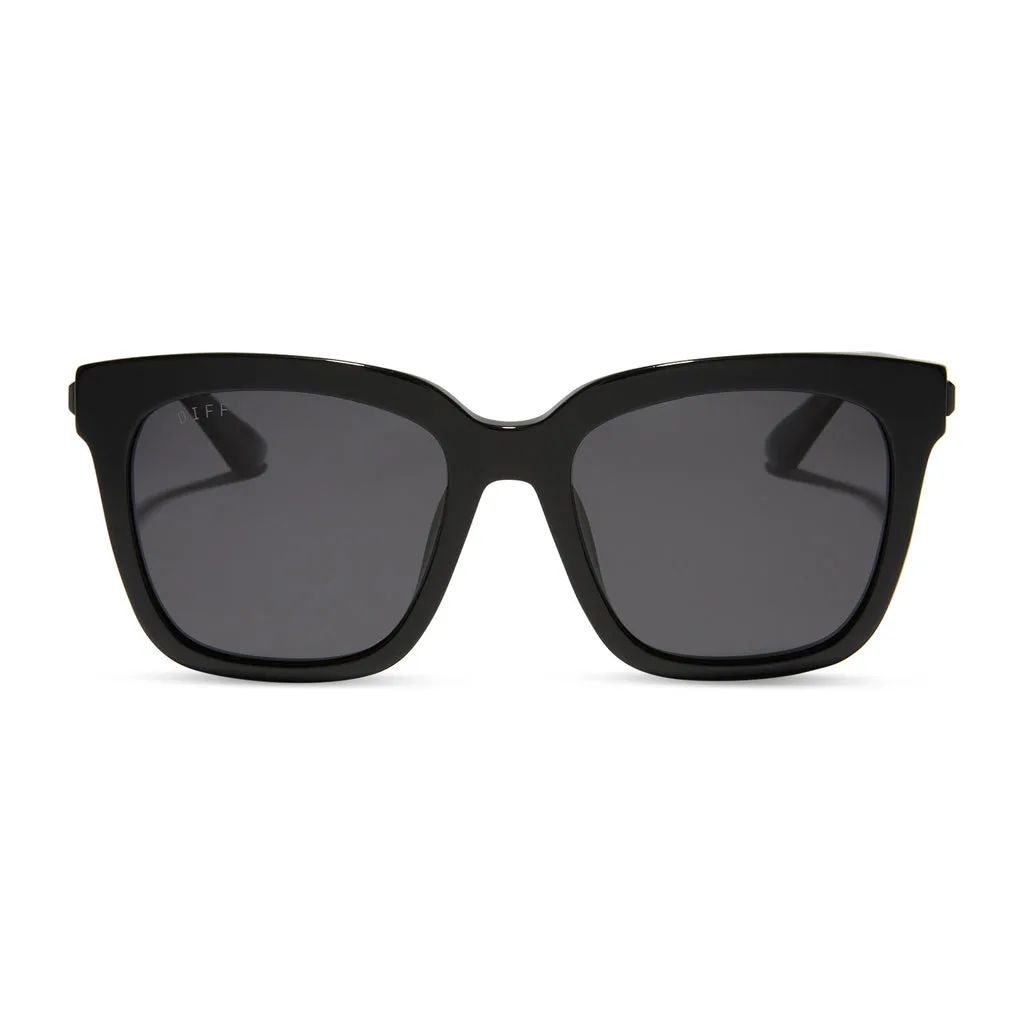
One of DIFF's best-selling shapes for a reason: it has the same wide, angular proportions as the Quay pick but in a slightly more classic black finish that works across more outfits. Polarization is standard on this pair, not an add-on, which matters if you're driving or near water often and want actual glare reduction instead of just tinted lenses.
Key specs:
- Price: $128
- Frame material: black acetate, oversized square shape
- Lenses: polarized grey, standard (not an upgrade)
- Charitable model: a pair of glasses or an eye exam donated per purchase
Best for: buyers who want the boldest square shape and don't mind paying for polarization as standard.
Skip if: $95-$105 already covers what you need.
Honest caveat: at $128 it's the most expensive of the four picks here, and the black-on-black colorway shows nose pad oil and smudges more visibly than a patterned acetate would, so you'll be cleaning the lenses more often.
4. Sunski Vallarta ($58)
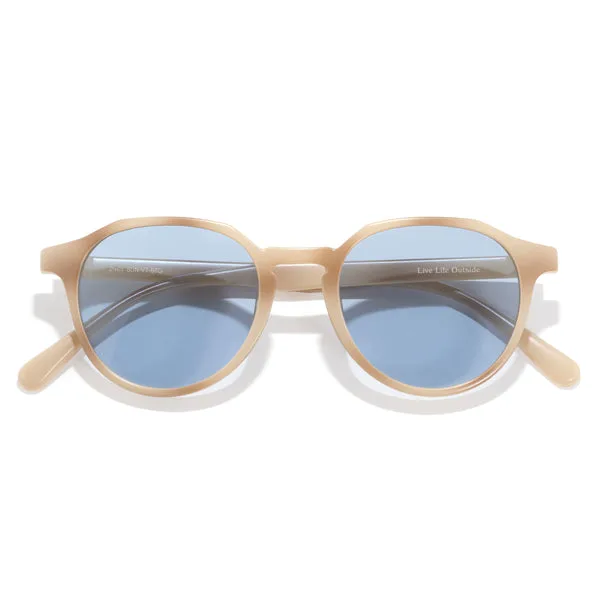
The lightest pick here by a wide margin, made from Sunski's recycled SuperLight resin. The geometric brow line does the same job as the square corners on the other three picks: it interrupts the curve of a round face with a straight edge, sitting above softly rounded lenses for a shape that's less severe than a full square.
Key specs:
- Price: $58, the cheapest pick here
- Frame material: recycled SuperLight resin, geometric browline shape
- Fit: small size, described by Sunski as a narrow fit for smaller faces
- Warranty: lifetime warranty on the frame
Best for: smaller or narrower round faces who want a lighter frame and a lower price.
Skip if: you have a wider face and need the frame to actually reach past your face's widest point.
Honest caveat: Sunski's own product page says the Vallarta is built for smaller faces with a narrow fit, not a universal size like the other three picks. If your round face runs on the fuller or wider side, this is the one pick here likely to look undersized rather than balanced.
Comparison
A quick side-by-side before the full breakdown above.
- Warby Parker Carson: Price: $95, Frame: Square acetate, standard width, Best for: Safe everyday pick.
- Quay 5th Ave: Price: $105, Frame: Oversized square metal, Best for: Maximum structural contrast.
- DIFF Eyewear Bella: Price: $128, Frame: Oversized square acetate, polarized, Best for: Boldest, polarized standard.
- Sunski Vallarta: Price: $58, Frame: Geometric browline, narrow fit, Best for: Smaller or narrower faces.
FAQ
What sunglasses shape is worst for round faces?
Round or oval lenses are the shape to avoid. They mirror the same curve your face already has instead of contrasting it, which is the opposite of what actually flatters a round face.
Do oversized sunglasses work for round faces?
Yes, as long as the frame has real corners or an angular brow line and actually extends past your face's widest point. An oversized frame that's still round in shape doesn't help; an oversized square or geometric frame does.
Is polarization worth paying more for?
If you drive often, spend time near water, or are outside for long stretches, polarized lenses cut real glare that a plain tinted lens doesn't. If you mostly wear sunglasses for short walks or errands, standard UV-protected lenses are enough and you can put the savings toward a better frame shape instead.
Should you size up if you're between frame widths?
Generally yes, within reason. A frame that runs slightly wide still gives you the structural contrast a round face benefits from, while a frame that runs slightly narrow just looks tight without adding any of the angular effect you're buying it for. The exception is a genuinely oversized style like the Quay or DIFF pick here, where sizing up further can tip into looking like the frame is wearing you instead of the other way around.
“We compared four real sunglasses styles on frame angle, not brand hype. Here's what actually adds structure to a round face, and what shape to skip entirely.”
How to Choose
Start with your face's actual width, not a guess. Hold a frame up (or check its lens and temple width against a pair of sunglasses you already own and like) before you buy anything oversized. If you're unsure, the Carson is the safest default: standard proportions, a clean square shape, and a price that doesn't punish you for guessing wrong on width.
If you already know you want more visual impact, go oversized with the Quay or DIFF pick, but only if your face is on the fuller or wider side of round. Vallarta's narrow fit note from Sunski itself is a good reminder that "best for round faces" still needs a second filter of your actual face size, not just the shape category.
A quick way to check fit without leaving your house: measure the widest point of your face, ear to ear, with a soft tape measure or a strip of string against a ruler. Match that number against the frame's temple width, listed on every product page linked above. If the frame's width comes in noticeably under your measurement, it's going to look pinched no matter how good the shape is on paper. If it comes in a few millimeters over, that's the oversized effect working the way it's supposed to.
Lens tint plays a smaller role than shape, but it's not nothing. Darker, more neutral tints (grey, black) tend to disappear into the frame and let the shape do the talking, which is what you want when the shape itself is doing the corrective work. Warmer gradient tints, like the brown in Carson's Striped Eucalyptus, add a bit of visual softness back in, which is worth considering if a fully angular black frame feels like too sharp a contrast for your taste.