
Why Kitchen Knives Cost So Differently Per Inch, By Blade Type (2026)
10 real picks, tested against real specs and prices

A 12-inch carving knife and a 3.5-inch paring knife can come from the same brand, the same steel, the same factory, and still land on opposite ends of value math that makes no visual sense: the long blade is often the cheaper one per inch, sometimes by a factor of six. We measured price per inch of blade across ten real knives, from a budget imarku lineup through premium Victorinox, Zwilling, and Wüsthof, and the pattern holds at every price point. It isn't the brand. It's the blade shape.
Every price and blade length below comes from the listing itself, not a category average: imarku prices from the live Amazon listing, outside-brand prices and blade lengths pulled directly from Victorinox, Zwilling, and Wüsthof's own product pages. Cost per inch is price divided by stated blade length, rounded to the cent.
The split is deliberate: seven picks come from imarku, the single-brand Amazon-native line that spans nearly every common blade type at a consistent budget-to-mid price point, and three come from Victorinox, Zwilling, and Wüsthof, three well-known independent cutlery brands with real retail pricing outside Amazon's ecosystem. Ratings below are per-product; imarku's Amazon listing review counts are a parent-listing number repeated across variants, not a per-knife figure, so they're left out.
If you want to browse more kitchen tools, Naarayan's home category has a wider range.
The price-per-inch spread, ranked low to high
- imarku Brisket Knife, 12 in: $3.75/in ($44.99). The longest blade here, and the cheapest per inch by a clear margin.
- imarku Bread Knife, 10 in: $4.00/in ($39.99).
- imarku Gyutou Chef Knife, 8 in: $5.00/in ($39.99).
- imarku Santoku Knife, 7 in: $5.71/in ($39.99).
- imarku Meat Cleaver, 7.5 in: $6.13/in ($45.99).
- Victorinox Fibrox Chef's Knife, 7.9 in: $8.48/in ($67.00).
- imarku Paring Knife, 3.5 in: $8.57/in ($29.99).
- imarku Nakiri Knife, 7 in: $11.43/in ($79.99).
- Zwilling Pro Paring Knife, 3.94 in: $20.30/in ($79.99).
- Wüsthof Classic Nakiri, 7 in: $24.29/in ($170.00). The shortest-blade-relative-to-price knife on the list, and the most expensive per inch by far.
Read top to bottom, the pattern isn't about brand prestige. It's about blade category. Every long straight-edge blade here, bread and brisket, lands under $5 an inch. Every short precision blade, paring and nakiri, lands well above $8 an inch, and the premium versions of those same two categories are the two most expensive picks on the entire list.
1. imarku Brisket Knife, 12 Inch ($44.99)


The longest blade in this roundup and, at $3.75 an inch, the cheapest per inch too. A long straight-edge slicing blade is one of the simplest shapes to forge and grind: no curve to profile, no fine tip geometry, just a consistent edge run down a long, relatively flat piece of steel.
Best for: slicing brisket, roasts, and large cuts where a long, uninterrupted stroke matters more than fine control.
Skip if: you rarely cook cuts large enough to need a 12-inch blade. It's an occasional-use knife for most home kitchens.
Honest caveat: at this price point the handle is a basic pakkawood composite, not a full-tang forged bolster. It does the slicing job well; it isn't a showpiece.
- Blade length: 12 in
- Price per inch: $3.75/in
- Material: Japanese high-carbon stainless steel, pakkawood handle
- Rating: 4.6 stars
2. imarku Bread Knife, 10 Inch ($39.99)

The second-cheapest blade per inch on this list, for the same structural reason as the brisket knife: a long serrated edge is a repeating pattern stamped and set down a straight blank, not a hand-profiled curve.
Best for: crusty bread, cake layers, and anything else a serrated edge saws through cleaner than a straight one.
Skip if: you already own a long serrated knife. Bread knives are close to single-purpose.
Honest caveat: serration means this one can't be honed on a standard sharpening steel the way a straight edge can; plan on a specialty serrated sharpener eventually.
- Blade length: 10 in
- Price per inch: $4.00/in
- Material: Japanese high-carbon stainless steel, serrated edge
- Rating: 4.8 stars
3. imarku Gyutou Chef Knife, 8 Inch ($39.99)
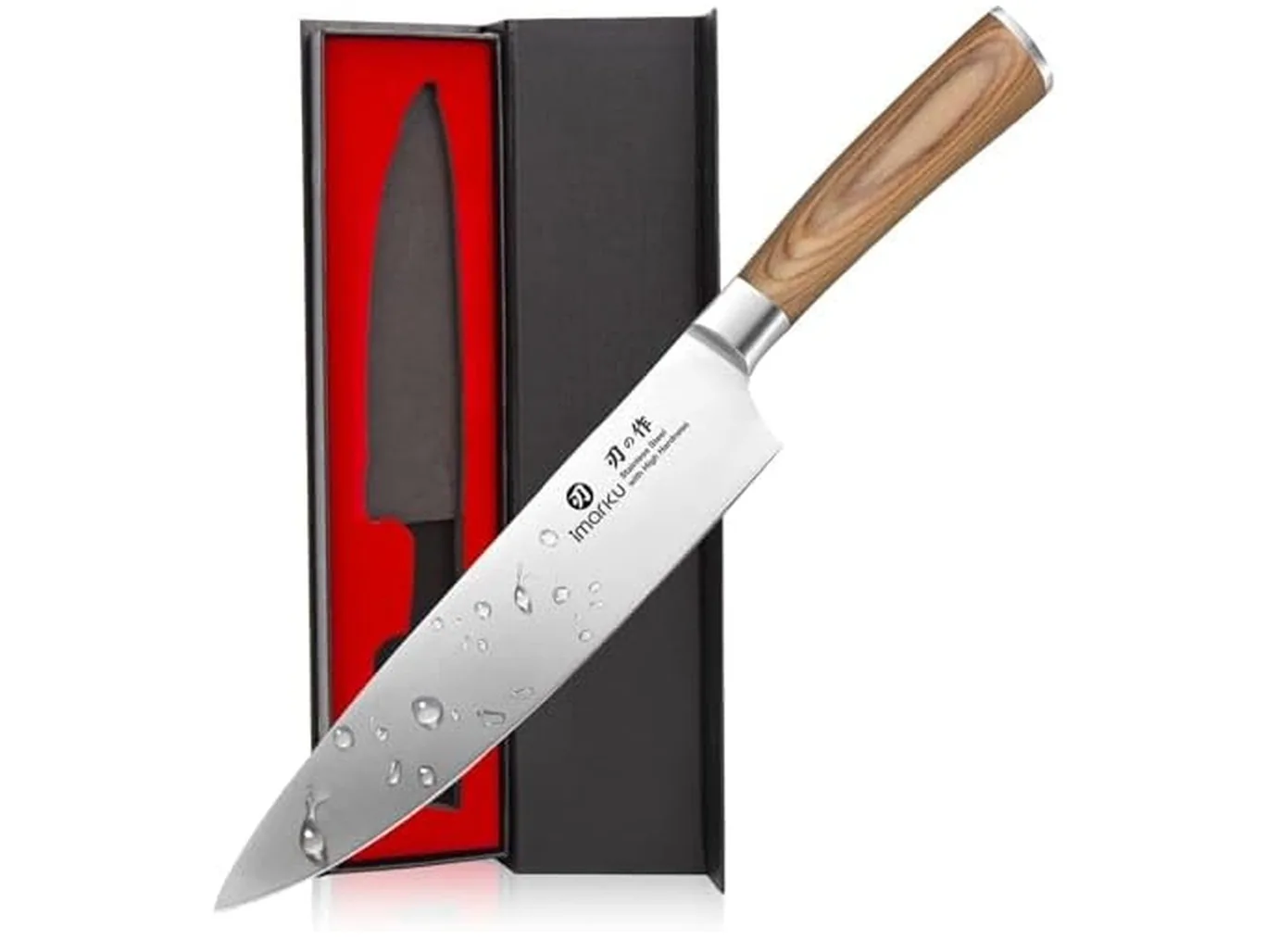
The workhorse blade shape, and priced accordingly: mid-pack on this list at $5.00 an inch. A chef's knife needs a curved edge profile for rocking cuts, which takes more grinding work than a straight blade but far less than a short precision edge.
Best for: the one knife that should handle most day-to-day chopping, dicing, and mincing if you're only buying one.
Skip if: you're building a full set and already have a santoku; the two overlap heavily in daily use.
Honest caveat: SUS440A steel holds a working edge well but isn't in the same hardness class as the premium German or high-end Japanese steels used further down this list; expect to hone it more often.
- Blade length: 8 in
- Price per inch: $5.00/in
- Material: Japanese SUS440A high-carbon steel, golden handle
- Rating: 4.6 stars
4. imarku Santoku Knife, 7 Inch ($39.99)

A flatter profile than the gyutou above, built for a push-cut rather than a rock-chop, at a nearly identical price and a slightly higher per-inch cost simply because the blade is shorter.
Best for: vegetable-heavy prep and anyone who prefers an up-and-down chopping motion over a rocking one.
Skip if: you already have a gyutou. The two shapes solve overlapping problems, not different ones.
Honest caveat: the wider blade face means less knuckle clearance on a cutting board than a narrower chef's knife; take that into account if board space is tight.
- Blade length: 7 in
- Price per inch: $5.71/in
- Material: Japanese high-carbon stainless steel
- Rating: 4.6 stars
5. imarku Meat Cleaver, 7.5 Inch ($45.99)

A wide, heavy rectangular blade costs more per inch than the chef and santoku shapes above it because more of the blade is steel by surface area, not just by length; a cleaver is closer to a slab than a taper.
Best for: cutting through bone, breaking down poultry, and heavy chopping where you want mass behind the edge.
Skip if: your prep is mostly boneless proteins and vegetables. A cleaver is overbuilt for that work.
Honest caveat: the added weight is a feature for chopping through bone and a liability for fine mincing; it's not a do-everything blade.
- Blade length: 7.5 in
- Price per inch: $6.13/in
- Material: Japanese high-carbon steel, pakkawood handle
- Rating: 4.8 stars
6. Victorinox Fibrox Chef's Knife Extra Wide, 8 In ($67.00)

The first sign the pattern isn't an imarku quirk: a well-known Swiss brand's standard chef's knife, at nearly double imarku's chef knife price, still lands at a comparable-shape mid-pack cost per inch, not a wildly different one. Long, curved, general-purpose blades stay cheap per inch across brands.
Best for: the widely recommended "buy this and stop shopping" chef's knife for serious home cooks who want a proven, professional-kitchen-standard blade.
Skip if: you want a lighter Japanese-style profile. The Fibrox is a heavier, German-style grind.
Honest caveat: the Fibrox handle is functional rubber composite, not a premium material; the price is entirely in the steel and grind, not the aesthetics.
- Blade length: 7.9 in (stated as an 8-inch knife)
- Price per inch: $8.48/in
- Material: high-carbon stainless steel, Fibrox non-slip handle
- Rating: widely cited as a professional-kitchen standard
7. imarku Paring Knife, 3.5 Inch ($29.99)
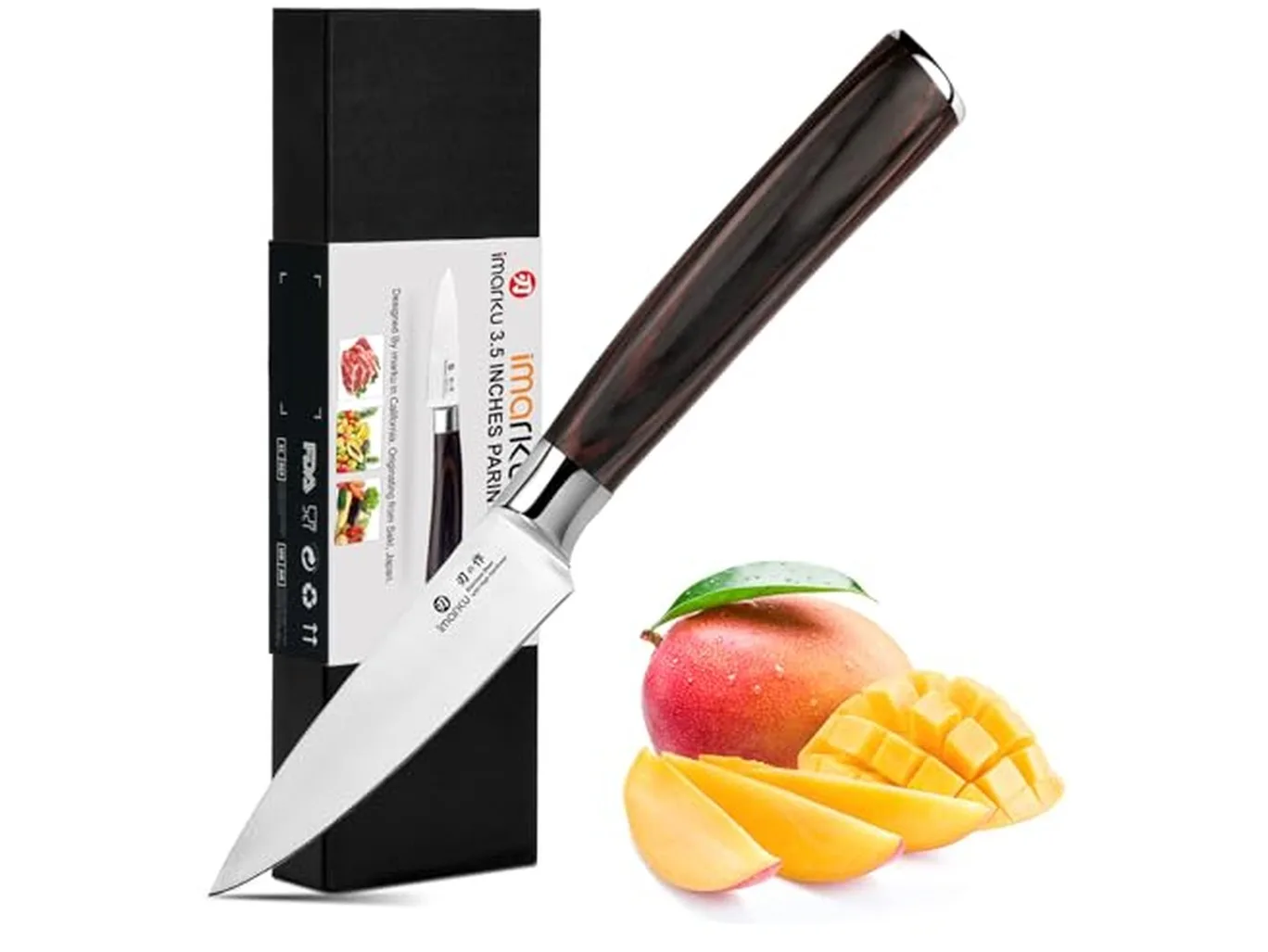
This is where the pattern flips. A blade less than half the length of the chef knife above costs more per inch, not less, because a paring knife's short edge still needs a fine point, a controlled taper, and precision grinding, work that doesn't scale down proportionally with blade length.
Best for: peeling, trimming, and any cut where you're holding the food, not the board.
Skip if: you're trying to build a set on a strict per-inch value basis. This isn't where the value is, by design.
Honest caveat: a short blade is genuinely harder to grind precisely than a long one, which is the honest reason this costs more per inch, not padding.
- Blade length: 3.5 in
- Price per inch: $8.57/in
- Material: Japanese high-carbon stainless steel
- Rating: 4.6 stars
8. imarku Nakiri Knife, 7 Inch ($79.99)
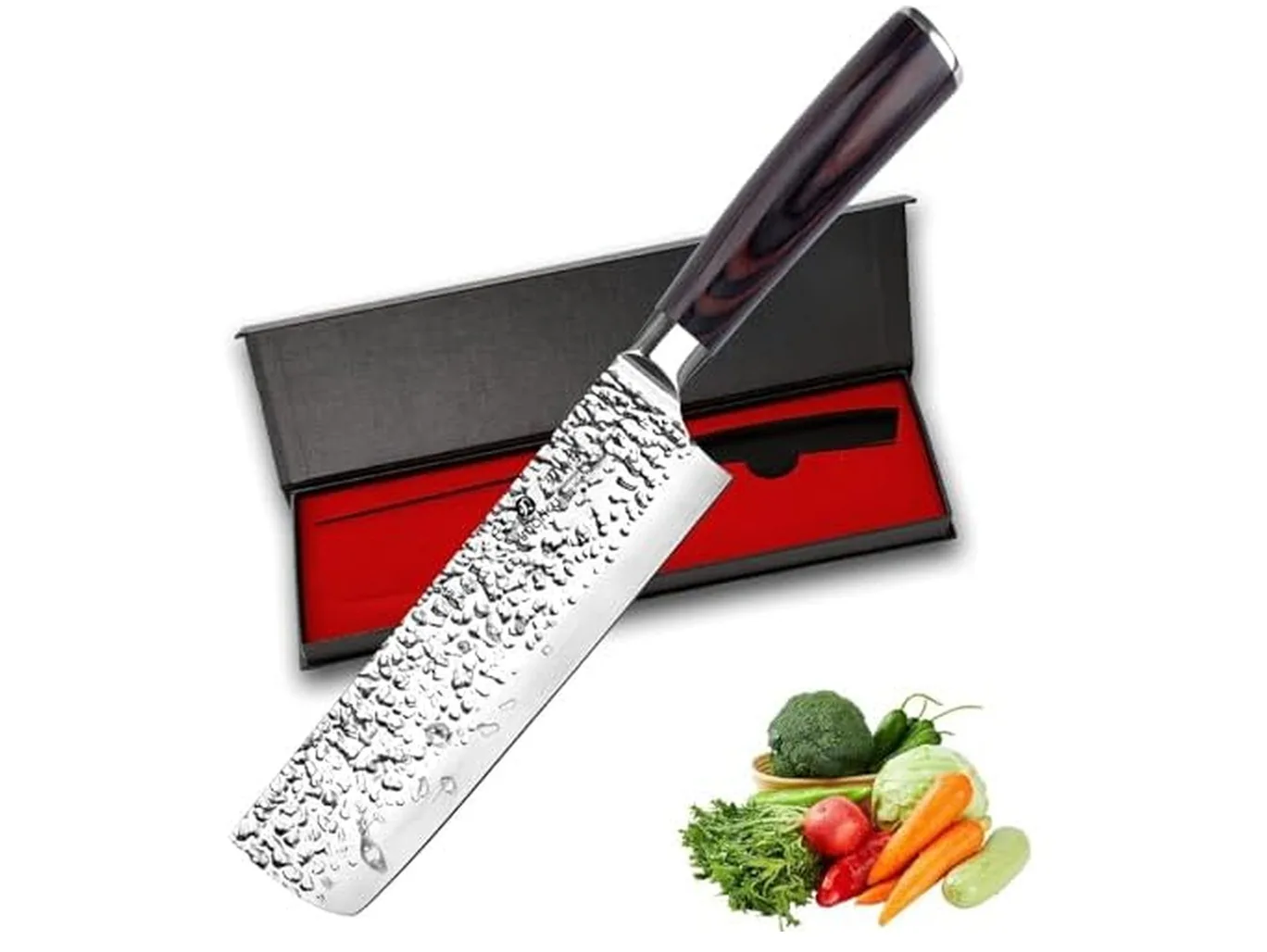
A flat-edge vegetable knife at exactly double the price of imarku's own santoku, a similar-length, similar-purpose blade. The difference is edge geometry: a nakiri's completely flat edge with squared-off corners requires more precise, consistent grinding along its full length than a santoku's slightly curved tip.
Best for: vegetable prep specifically, where a fully flat edge means every cut goes all the way through the board without rocking.
Skip if: you already own a santoku and don't do enough vegetable-heavy cooking to justify a second, narrower-purpose blade.
Honest caveat: the squared tip that makes a nakiri excellent for vegetables also makes it a poor substitute for tasks that need a point, like trimming fat off meat.
- Blade length: 7 in
- Price per inch: $11.43/in
- Material: Japanese high-carbon stainless steel
- Rating: 4.6 stars
9. Zwilling Pro Paring Knife, 4 In ($79.99)

Confirms the paring-knife pattern at a premium tier: German special-formula steel, a curved bolster for grip, and a price nearly triple imarku's paring knife for a blade that's only slightly longer. The gap here is precision manufacturing and lifetime warranty coverage, not a different length-to-cost formula.
Best for: cooks who want a paring knife that matches a full premium Zwilling block set, or who value a lifetime warranty on a small, easy-to-lose blade.
Skip if: you want the imarku paring knife's per-dollar edge quality without the brand premium. Both are genuinely sharp; this one adds provenance and warranty.
Honest caveat: at $79.99 for a 4-inch blade, this is the second most expensive per-inch knife in this whole roundup. It's a deliberate premium purchase, not a value one.
- Blade length: 3.94 in
- Price per inch: $20.30/in
- Material: German special-formula steel, curved bolster handle
- Rating: manufacturer lifetime warranty
10. Wüsthof Classic Hollow Edge Nakiri, 7 In ($170.00)

The most expensive knife per inch in this entire roundup, and the clearest proof of the whole pattern: same blade length as imarku's nakiri, more than double the price, because a hollow-ground edge, precision-forged German steel, and full-tang construction all concentrate cost into a short blade with no long straight run to spread it across.
Best for: cooks who want a forged, full-tang nakiri built to last decades, with a recognizable brand behind the steel.
Skip if: you want to test whether a flat-edge vegetable knife fits your workflow before committing $170 to one. Start with a budget nakiri first.
Honest caveat: the hollow-ground edge, small air pockets ground into the blade face, reduces food sticking but adds manufacturing steps that show up directly in the price. It's a real feature, not just branding.
- Blade length: 7.0 in
- Price per inch: $24.29/in
- Material: precision-forged German steel, hollow edge, full tang
- Rating: recognized full-tang forged construction
Comparison
A quick side-by-side before the full breakdown above.
- imarku Brisket Knife ($44.99): 12 in, $3.75/in, the cheapest per inch on the list.
- imarku Bread Knife ($39.99): 10 in, $4.00/in, the second-cheapest.
- imarku Gyutou Chef Knife ($39.99): 8 in, $5.00/in, the standard all-purpose blade.
- imarku Santoku Knife ($39.99): 7 in, $5.71/in, same price tier as the gyutou.
- imarku Meat Cleaver ($45.99): 7.5 in, $6.13/in, heavier-blade premium.
- Victorinox Fibrox Chef's Knife ($67.00): 7.9 in, $8.48/in, premium tier, same shape category as the cheap gyutou above.
- imarku Paring Knife ($29.99): 3.5 in, $8.57/in, the pattern flips here.
- imarku Nakiri Knife ($79.99): 7 in, $11.43/in, same length as the santoku, double the price.
- Zwilling Pro Paring Knife ($79.99): 3.94 in, $20.30/in, premium-tier paring.
- Wüsthof Classic Nakiri ($170.00): 7 in, $24.29/in, the most expensive per inch on this list.
FAQ
Why does a short paring knife cost more per inch than a long chef's knife?
Blade length doesn't scale grinding difficulty the way it scales steel used. A long straight or gently curved edge is efficient to forge and grind in one continuous motion. A short blade with a fine point and controlled taper, like a paring knife, needs precise work concentrated into a small area, and that labor cost doesn't shrink just because the blade is shorter.
Is a nakiri knife supposed to be this much more expensive than a santoku?
Not automatically, but the pattern in this post held at both a budget and a premium brand: imarku's nakiri costs exactly double its own santoku for the same blade length, and Wüsthof's premium nakiri is priced well above a same-length premium chef's knife too. A fully flat, squared-off edge takes more consistent grinding along its whole length than a curved profile does.
Does buying a premium brand change this price-per-inch pattern?
No, it scales it up. Victorinox's chef's knife and imarku's chef knife sit in a similar per-inch range for the same blade shape, while Zwilling's and Wüsthof's short precision blades cost even more per inch, relative to their own long-blade knives, than imarku's do. The mechanism is shape, not brand tier.
Should I buy the cheapest-per-inch knife type first?
No, buy based on what you actually cut most, not per-inch value. A bread knife is the cheapest per inch on this list because bread knives are structurally cheap to make, not because they're the most useful first purchase for most home cooks. Most people get more daily use out of a chef's knife or santoku despite the higher per-inch cost.
“We measured price per inch of blade across ten real knives, budget to premium. Paring and nakiri blades cost up to six times more per inch than a bread knife. Here's the actual mechanism.”
How to Choose
Start with what you actually cook, not which blade is cheapest per inch. If your kitchen work is mostly slicing, bread, roasts, large cuts, the long straight blades here are genuinely both the most useful and the best per-inch value, a rare case where those two things line up. If you cook a lot of vegetables and want a fully flat push-cut edge, a nakiri is worth its premium; just know going in that you're paying for edge geometry, not extra steel.
Paring knives are the one category where per-inch value math stops being useful entirely. Every paring knife on this list, budget or premium, costs more per inch than every long blade, because the size of the job it needs to do well has nothing to do with how much steel is in it.
If you're building a set gradually rather than buying a block all at once, this data suggests a sensible order: start with a chef's knife or santoku for daily work, since that shape carries the best combination of price-per-inch and actual daily utility, then add a paring knife and a longer slicer once you know what you're missing.
Last, brand tier changes the price, not the pattern. Every brand in this post, budget and premium, priced short precision blades higher per inch than long utility blades. If a paring or nakiri from any brand looks unusually cheap per inch relative to its own lineup's other blades, that's worth double-checking before buying.